Subarnarekha : Manoj Das’s Childhood Memory and His Creative Journey
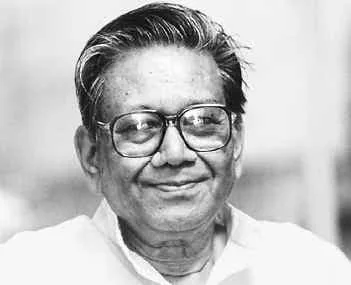
Manoj Das is considered as one of the most distinguished voices in Indian English and Odia literature, celebrated for his evocative storytelling that blends realism, folklore, myth, and gentle fantasy. One of the defining feature of his literary universe is the landscape of his childhood, particularly the river Subarnarekha. Flowing through Odisha, Jharkhand, and West Bengal, this river occupies a special place in Manoj Das’s memory and imagination. In his writings, the river transcends its physical identity to become a symbol of time, memory, moral continuity, and spiritual reflection. Undoubtedly, there’s significance of Subarnarekha in Manoj Das’s personal memory and it has multifaceted presence in his literary works.
Manoj Das was born in Sankhari village in the Balasore district of Odisha, close to the banks of the Subarnarekha River. His early life was shaped by the rhythms of village existence, where nature played an intimate role in daily experience. The river was not merely a geographical feature but a living presence associated with childhood play, seasonal change, village rituals, and oral storytelling.
In his autobiographical work Chasing the Rainbow: Growing Up in an Indian Village, Manoj Das recalls the atmosphere of rural life with nostalgia and sensitivity. The river Subarnarekha appears as a silent companion of his formative years, symbolizing innocence, wonder, and emotional growth. Through this river, he learned to observe life closely, to sense mystery beneath ordinary appearances, and to appreciate the quiet continuity of nature. These early impressions became the emotional foundation of his later literary vision.
In Manoj Das’s fiction, the river Subarnarekha often appears indirectly. While the river is not always named, the settings of many stories—remote villages, riverbanks, estuaries, and forested landscapes—clearly evoke its presence. The riverine environment provides a natural backdrop for his exploration of rural society, traditional values, and human relationships.
Works such as The Submerged Valley and Other Stories, Farewell to a Ghost, and The Crocodile’s Lady and Other Stories reveal a world shaped by rivers and nature. These settings allow Manoj Das to depict a slow-paced life governed by collective memory, folklore, and moral codes rather than modern urgency. The Subarnarekha-inspired landscape thus becomes an imaginative homeland, grounding his stories in authenticity and emotional depth.
Symbolically, the Subarnarekha functions on multiple levels in Manoj Das’s works. First, it represents time and continuity. Like the river, life in his stories flows steadily, indifferent to individual ambition or suffering. The river silently witnesses generational change, moral decline, and human folly, reinforcing the idea that nature endures while human concerns remain transient.
Second, the river acts as a vessel of memory and nostalgia. Characters often experience longing for the past and a sense of loss caused by social and cultural change. The river becomes a bridge between past and present, allowing memory to surface naturally and meaningfully.
Third, the river holds spiritual and moral significance. Rooted in Indian cultural traditions that regard rivers as sacred, Manoj Das presents the river as morally neutral yet spiritually elevated. Its purity contrasts with human corruption, ego, and hypocrisy. In this sense, the river serves as a silent moral presence rather than an active judge.
A very distinctive feature of Manoj Das’s fiction is his subtle blending of realism with the supernatural. Rivers in his stories often function as thresholds between the known and the unknown. They are spaces where myths, ghosts, and inexplicable events emerge naturally within the narrative.
This treatment reflects the traditional village mindset, where nature is both familiar and mysterious. The Subarnarekha-inspired river thus becomes a site of awe, fear, and spiritual possibility, reinforcing Manoj Das’s belief that reality extends beyond rational explanation.
The river also enables Manoj Das to portray the essence of rural Indian life. It sustains agriculture, shapes occupations, and influences social customs and rituals. Village communities depend on the river not only for survival but also for emotional and cultural continuity. Through this depiction, Manoj Das captures what is often described as the “village soul” of India—marked by simplicity, collective living, oral tradition, and quiet humor.
Moreover, Manoj Das’s use of the river reflects his broader philosophical outlook, deeply influenced by Indian spiritual thought. The Subarnarekha symbolizes acceptance, harmony, and cosmic order. It reminds readers of the insignificance of individual ego and the importance of humility before the vastness of existence. Unlike modern narratives dominated by conflict and chaos, Manoj Das’s river embodies calm endurance and spiritual balance.
Stylistically, the river setting supports Manoj Das’s simple yet profound prose writing . His language is quite restrained, his emotions understated, and his irony gentle. Nature in his stories is never decorative; it is integral to structure, mood, and meaning. Thus Subarnarekha becomes a narrative device that enhances realism while deepening symbolic resonance.
Finally, in Manoj Das’s memory and literary works, the river Subarnarekha emerges as a powerful and enduring presence. It is at once a childhood companion, a narrative landscape, a symbol of time and memory, and a spiritual metaphor. Flowing quietly through his stories, the river unites personal experience with collective tradition, realism with myth, and memory with philosophy. Unquestionably, the Subarnarekha represents Manoj Das’s vision of life itself—steady, mysterious, and profoundly meaningful.
# Pradeep Biswal is a poet , editor and translator based in Bhubaneswar